
Why In-Home Dementia Care Is So Important
A dementia diagnosis changes everything—routines, relationships, even a family’s sense of security. Yet most older adults say they’d rather remain in familiar surroundings than relocate to an institutional setting.
Home Care Solutions makes this wish possible. We provide in-home care for dementia patients, combining best practices in memory care with warm, personal companionship—from a few hours a week to full 24/7 coverage.
Our experienced caregivers provide gentle support during morning routines and offer reassurance at night when needed. We create a care plan that respects each client’s history, preferences, and strengths, whether care is part time or structured as 24 hour care at home.
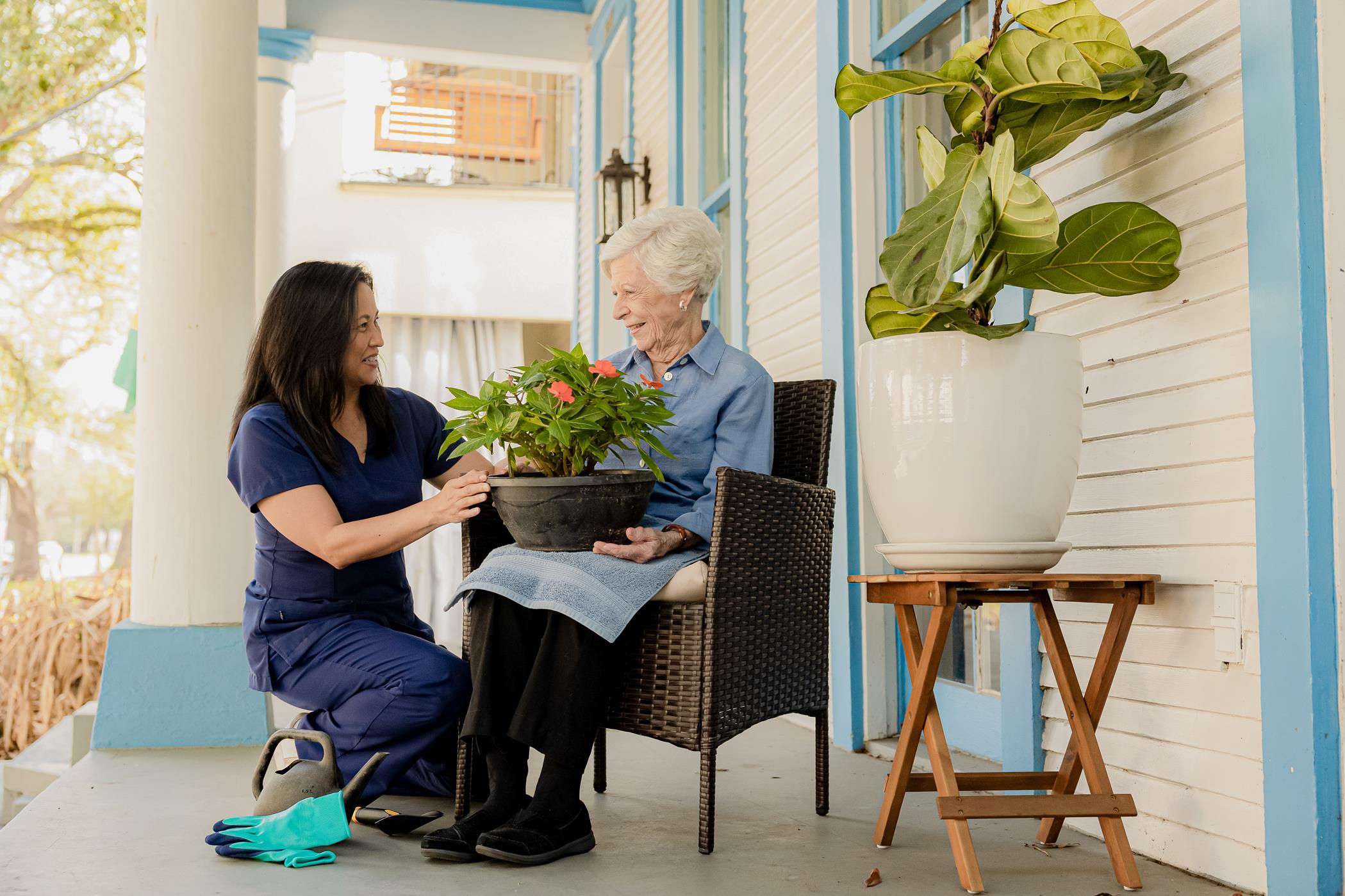
What Is Private In-Home Dementia Care?
Private, in-home memory care places trained caregivers, safety support, and proven therapeutic activities inside the client’s home—not a facility. In a large memory-care wing, staff rotate and schedules are dictated by the building, not the individual.
At Home Care Solutions, a small, consistent team handles bathing, medication reminders, mobility assistance, and cognitive activities. This continuity builds trust and measurably reduces anxiety associated with dementia. All care is supervised by our Client Services Coordinator. When safety concerns increase, we can seamlessly transition to around-the-clock care with a coordinated 24-hour caregiver team.
Emotional & Cognitive Benefits of Aging in Place
Remaining at home is more than a sentimental preference—it has documented cognitive benefits. The brain regions responsible for forming new memories are typically the first affected by Alzheimer’s disease. A familiar floor plan, the scent of home-cooked meals, and old photographs help people feel grounded. These comforts can reduce confusion, agitation, and wandering, particularly when paired with consistent in-home care support.
Minimizes Disruptive Transitions
Environmental moves are among the top triggers for rapid functional decline in people with dementia. Avoiding institutional admission and using in-home care—including 24/7 support when needed—can help sustain daily living skills longer and preserve quality of life.
Strengthens Family Bonds
Loved ones can stop by for coffee, take part in life-story projects, and join music therapy sessions without worrying about visiting hours. Family members retain their meaningful roles as spouse, child, or grandchild—rather than becoming a “facility visitor.”
When Is It Time to Consider In-Home Dementia Care?
Early intervention prevents crises. Watch for these progressive warning signs:
- Repeated kitchen fires, scorched pans, or appliances left on
- Missed doses or accidental double-doses of critical medication
- Wandering outside at night or attempts to “go to work” decades after retirement
- Weight loss from forgotten meals or spoiled food consumption
- Increased agitation or aggression toward family caregivers
If two or more of these signs appear within a month, schedule a professional assessment with our team.
Our Dementia In-Home Care Services
Every care plan begins with a personal Client Services Coordinator visit to identify care goals, current cognitive level, and household hazards. From there we build a tailored menu of dementia home care services:
Personal & Household Support
Bathing, grooming, incontinence care, linen changes, and meal preparation tailored to physician-ordered diets.
Engagement & Therapeutic Activities
These may include reminiscence conversations using family photos and personal mementos, Montessori-inspired sorting or folding tasks to foster a sense of purpose, and chair-based movement set to favorite jazz or pop tunes.
Medication & Health Coordination
Our Care Management services include nurse oversight of pill-box fills, vitals tracking, and liaison with neurologists, geriatric psychiatrists, and home-health therapists.
In-Home Memory Care vs. Facility Care
See how personalized home care compares to institutional memory-care settings:
| Feature | In-Home Memory Care (Home Care Solutions) | Memory-Care Facility |
|---|---|---|
| Familiar environment | ✅ Client stays in their own home | ❌ New, unfamiliar surroundings |
| Consistent caregiver | ✅ Small, dedicated team | ❌ Rotating staff |
| Personalized schedule | ✅ Built around client’s preferences | ❌ Facility-wide routines |
| Family access | ✅ Anytime — no visiting hours | ⚠️ Restricted visiting hours |
| Care intensity options | ✅ Part-time to 24/7 live-in | ⚠️ Fixed level of care |
| Professional supervision | ✅ Client Services Coordinator oversight | ✅ On-site nursing staff |
| Risk of relocation decline | ✅ Eliminated | ❌ Known trigger for rapid decline |
Home Care Solutions combines the personal touch of memory care at home with the professional support typically associated with facilities—without uprooting your loved one’s life.
The Path to Care: From First Call to First Visit
- Initial Call or Online Form: Family describes needs; a Care Coordinator schedules a free consultation.
- Client Services Coordinator Assessment: Health history, cognitive screening, and home-safety walk-through.
- Customized Care Plan: Goals, daily schedule, and caregiver match finalized within 48 hours.
- Caregiver Introduction: Meet-and-greet before the first shift to build comfort and rapport.
- Ongoing Monitoring: Digital care notes, monthly family calls, and quarterly home visits.
Practical Communication Techniques for Dementia Care at Home
Misunderstandings—not memory loss—cause many of the daily frustrations families face. Using evidence-based communication can reduce tension, improve cooperation with personal care tasks, and protect your loved one’s dignity.
Speak in Short, Concrete Sentences
Start with the person’s name, make eye contact, and limit each instruction to a single idea. Instead of “It’s time for your bath, so let’s head to the bathroom and then we’ll wash your hair,” try: “Dad, it’s bath time. Let’s go to the bathroom together.”
Offer Two Simple Choices
Open-ended questions create anxiety. Offering two easy choices helps maintain independence. For example, you can ask, “Would you like oatmeal or eggs?” This approach reduces stress on decision-making skills affected by dementia.
Validate Feelings Before Redirecting
If Mom insists she needs to “pick up the kids,” respond to the underlying emotion (“You’re worried about the children”) before gently redirecting (“They’re safe at school right now; let’s look at their photos while we wait for them to get home”).
Use Visual and Tactile Cues
Placing pictures of a toilet or shower on the bathroom door helps with orientation. Handing over a toothbrush, rather than just asking the person to brush, taps into procedural memory that often persists well into moderate Alzheimer’s.
Tip: Keep a laminated cheat-sheet of these techniques near the kitchen phone so every family member—and any new respite caregiver—handles conversations consistently.

Nutrition and Hydration Strategies for Dementia at Home
A well-balanced diet and adequate fluids can sharpen cognition, stabilize mood, and prevent hospital trips for urinary-tract infections or dehydration. Yet memory loss often alters taste preferences or causes a loved one to forget they’ve skipped meals. These practical tips keep calories—and confidence—on track.
Small Adjustments Make Meals Easier
Even modest changes to presentation and routine can boost intake without turning the table into a battleground.
- Serve finger foods. Sliced fruit, quartered sandwiches, and baked chicken strips eliminate utensil confusion and preserve dignity.
- Use high-contrast plates. A dark blue dinner plate against mashed potatoes helps aging eyes distinguish food from background.
- Offer nutrient-dense snacks every two hours. Greek yogurt, cheese cubes, or peanut-butter crackers maintain steady blood sugar when full meals seem overwhelming.
- Flavor with familiar seasonings. Olfactory memory lingers; the aroma of Cajun spices or a hint of vanilla can trigger appetite in ways plain food cannot.
- Encourage sips of water after each bite. Verbal cueing—“Take a drink, please”—reduces choking risk and supports hydration goals of 6–8 cups daily.
When 24-Hour Dementia Care Is Needed
Dementia does not progress on a predictable schedule, and many families find that a level of care that worked well for months suddenly falls short. Recognizing when part-time or daytime support is no longer enough allows you to make the transition to around-the-clock care before a crisis forces the decision.
Consider 24-hour dementia care when any of the following describe your loved one’s daily life: nighttime confusion that leads to unsafe wandering, a pattern of falls or near-falls when unsupervised, difficulty recognizing family members combined with fear or agitation, or a primary caregiver who is reaching physical or emotional exhaustion. At this stage, a coordinated 24-hour caregiver team can step in seamlessly, maintaining the same continuity of care your loved one already trusts.
Learn more about how our 24-hour home care team structures round-the-clock coverage, from overnight shifts to full live-in support.
Wandering and Overnight Supervision
Wandering is one of the most common and most dangerous symptoms of Alzheimer’s and related dementias, and it often intensifies at night. Sundowning, a pattern of increased confusion and restlessness in the late afternoon and evening, can lead a loved one to leave the house, misidentify rooms, or attempt to complete tasks tied to an earlier stage of life, like getting ready for a job they retired from decades ago.
Overnight supervision addresses this risk directly. A caregiver present through the night can redirect wandering before it becomes dangerous, provide reassurance during confused moments, and give family members the ability to sleep without fear of what might happen. For many of our clients, overnight or 24-hour coverage becomes necessary specifically because of wandering behavior, not because daytime needs have changed.
If cost is a concern as you consider this level of care, our page on private-pay costs for in-home care walks through what to expect financially, so you can plan confidently rather than delaying a decision that affects your loved one’s safety.
Why Choose Home Care Solutions?
Your loved one’s favorite armchair, the scent of gumbo simmering, the porch swing that sparks old stories: these comforts can still be part of daily life. Home Care Solutions delivers personalized dementia care at home that preserves dignity, reduces hospitalizations, and supports the whole family.
We are locally owned and operated, with deep roots in the Crescent City community and decades of experience walking families through exactly this kind of transition. Our caregiver teams are chosen for empathy and cultural fit first, then thoroughly bonded, insured, and background-checked, so you can trust the person in your home as much as the care they provide. Pricing stays transparent throughout, with no weekend or holiday surcharges and no surprises added to your bill later.
Whether your loved one needs a few hours of companionship each week or full around-the-clock support, we build a plan around their history, preferences, and strengths rather than asking them to fit into ours. Reach out today to schedule a free consultation and take the first step toward the kind of care that lets your family stay a family, not just a visitor.
Frequently Asked Questions
Yes. Many families begin with four-hour respite blocks and scale to overnight or live-in coverage as the disease progresses.
Caregivers employ validation and redirection first; if behavior jeopardizes safety, our client-services coordinator contacts the family doctor.
Long-term-care policies often reimburse licensed agency services. We help file claims and provide the detailed care notes insurers require.